
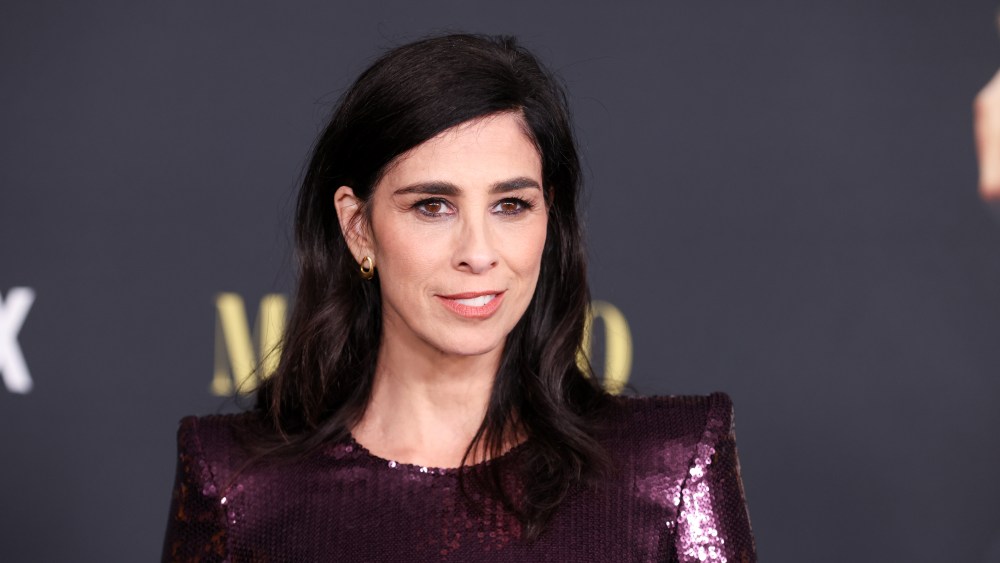
A federal choose on Wednesday rejected a declare introduced by 13 authors, together with Sarah Silverman and Junot Díaz, that Meta violated their copyrights by coaching its AI mannequin on their books.
Decide Vincent Chhabria concluded that Meta had engaged in “honest use” when it used a dataset of almost 200,000 books — together with the plaintiffs’ works — to coach its Llama language mannequin. The choice follows an identical ruling issued on Monday in a case towards Anthropic over its language mannequin, Claude.
“We admire right this moment’s choice from the Court docket,” a Meta spokesperson mentioned in an announcement. “Open-source AI fashions are powering transformative improvements, productiveness and creativity for people and firms, and honest use of copyright materials is a crucial authorized framework for constructing this transformative know-how.”
Chhabria rejected the plaintiffs’ declare that the corporate engaged in “unmitigated piracy” when it constructed the mannequin. The choose discovered that Llama can’t create copies of greater than 50 phrases, and that the AI mannequin is thus “transformative.”
He was extra open to the argument that AI might destroy the marketplace for unique works by utilizing them to create thousands and thousands of low cost knockoffs. That probably wouldn’t be “honest use,” even when the outputs had been totally different from the inputs, he wrote.
“What copyright legislation cares about, above all else, is preserving the motivation for human beings to create
inventive and scientific works,” the choose wrote. Honest use, he added, “sometimes doesn’t apply to copying that may considerably diminish the power of copyright holders to generate income from their works (thus considerably diminishing the motivation to create sooner or later).”
However Chhabria discovered that the authors on this case had not proven that they suffered any decline in e book gross sales, or that Llama is more likely to have such an impact.
“Meta launched proof that its copying hasn’t triggered market hurt,” he wrote. “The plaintiffs introduced no empirical proof on the contrary… All of the plaintiffs introduced is concept.”
Copyright holders have introduced dozens of lawsuits towards AI firms, alleging that coaching on copyrighted work with no license is unlawful.
Chhabria made clear that his ruling is confined to the details in entrance of him and that the result could possibly be totally different most often.
“Within the grand scheme of issues, the results of this ruling are restricted,” he wrote.
Boies Schiller Flexner LLP, which represented the plaintiffs, mentioned it disagrees with the result.
“The courtroom dominated that AI firms that ‘feed copyright-protected works into their fashions with out getting permission from the copyright holders or paying for them’ are typically violating the legislation,” mentioned a spokesperson for the agency. “But, regardless of the undisputed file of Meta’s traditionally unprecedented pirating of copyrighted works, the courtroom dominated in Meta’s favor. We respectfully disagree with that conclusion.”
The agency’s attorneys declined to touch upon whether or not they’ll enchantment.
The authors who introduced the case are Silverman, Díaz, Richard Kadrey, Christopher Golden, Ta-Nehisi Coates, Andrew Sean Greer, David Henry Hwang, Matthew Klam, Laura Lippman, Rachel Louise Snyder, Jacqueline Woodson, Lysa TerKeurst and Christopher Farnsworth.
The lawsuit alleges that Meta used “shadow libraries” to acquire thousands and thousands of copies of pirated books. Based on the filings, Meta’s engineers used BitTorrent to obtain the massive quantity of knowledge, which includes downloading information from a number of sources and, in some instances, reuploading it.
The swimsuit alleged that Meta violated the authors’ copyrights each within the AI coaching course of and within the means of downloading and reuploading the illicit libraries. Whereas the choose rejected the AI coaching declare, he was not requested to rule on the torrenting situation, so that continues to be unresolved.
The post Decide Rejects Authors’ Declare That Meta AI Coaching Violated Copyrights appeared first on Allcelbrities.